CULTURE · 2026-08-15
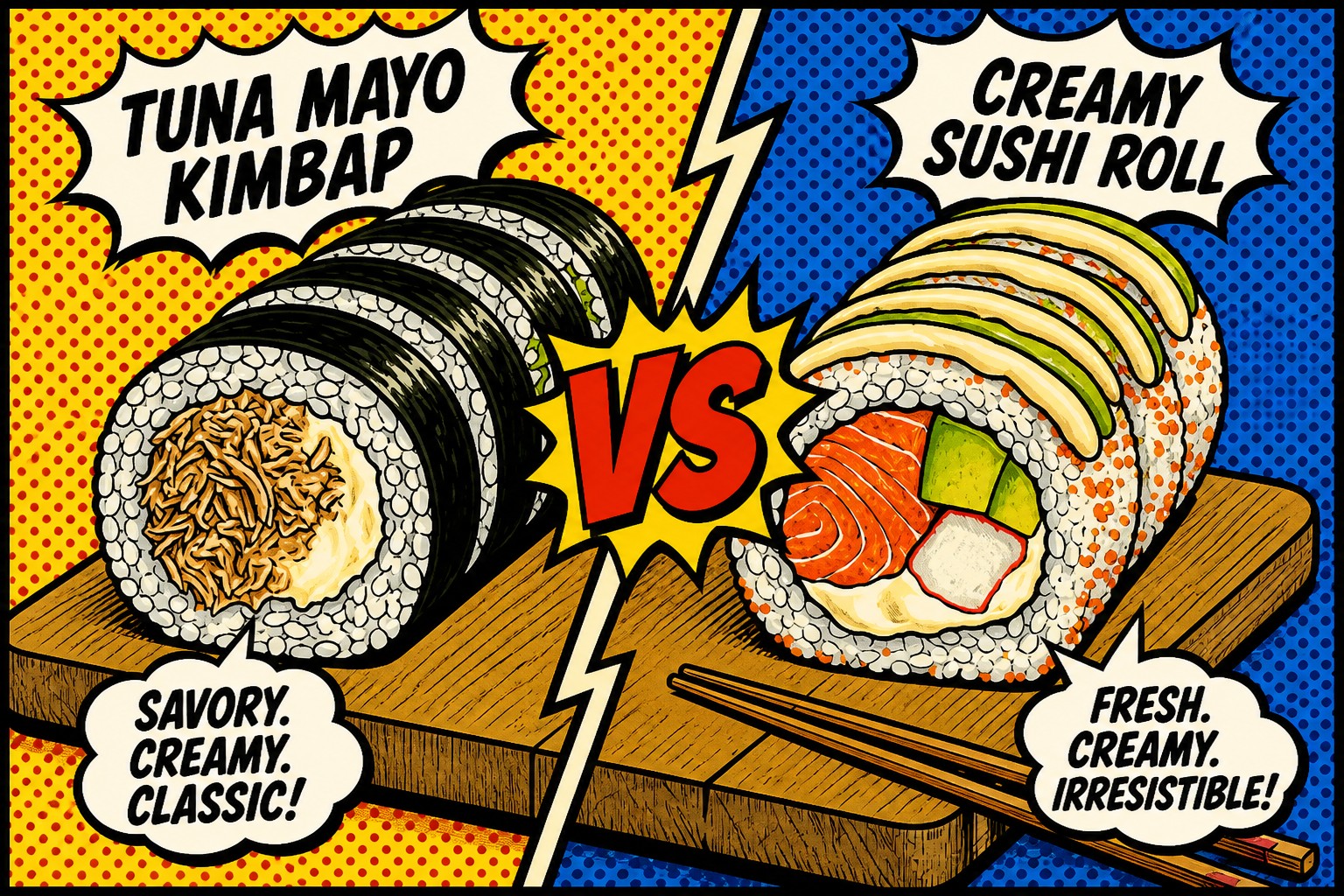
Tuna Mayo Kimbap vs. Creamy Sushi Roll: Same Tuna, Different Roll
By Kimbap Curator
When tuna meets mayo, kimbap and American sushi rolls diverge by seasoning, not by fish.
TL;DR
When tuna meets mayo, kimbap and American sushi rolls diverge by seasoning, not by fish.
American sushi's spicy tuna uses sriracha-mayo over vinegared rice with often raw tuna; kimbap's chamchi uses canned tuna-salt-mayo over sesame-oiled rice with cooked vegetables alongside. Both wrap in seaweed, but base rice seasoning signals the culture before any topping.
Texture contrast differs: kimbap leans on 5+ fillings per roll so tuna is one element among carrots and danmuji; creamy sushi often isolates tuna as the star with avocado as its only companion. Orchestral vs. solo again — within tuna itself.
Price and handling explain adoption: canned tuna kimbap costs a third of raw sushi-grade tuna per serving and holds longer in a lunchbox without ice, which is why office workers choose kimbap for desk lunch and sushi for date night. Format follows logistics.
Make a direct comparison platter: slice chamchi kimbap and a supermarket spicy tuna sushi roll side-by-side and taste rice alone from each. The rice teaches you more than the tuna does about why the rolls read differently, even when both are tuna-mayo at center.
Neither is inauthentic; both are diaspora. Korean lunchrooms made chamchi gimbap beloved before American sushi bars merged Philadelphia cream cheese into a roll — evolution is local, not export-only. Eat the tuna that matches your day's constraints.
More Korean food
Relevant pages on the two hub sites — recipes and a BBQ directory on bulgogi.ai, street rice cakes on tteokbokki.ai.
- bulgogi.ai — recipes & BBQ directory →Marinades, cuts, and a USA Korean BBQ map.
- tteokbokki.ai — street rice cakes →School-cart sauce, rose, mala, and tteok types.
- Classic cylinder rolls (gimbap.ai) →This site owns nude, folded, and cafe rolls; the everyday cylinder lives next door.